Princess Maria Stella of Salina
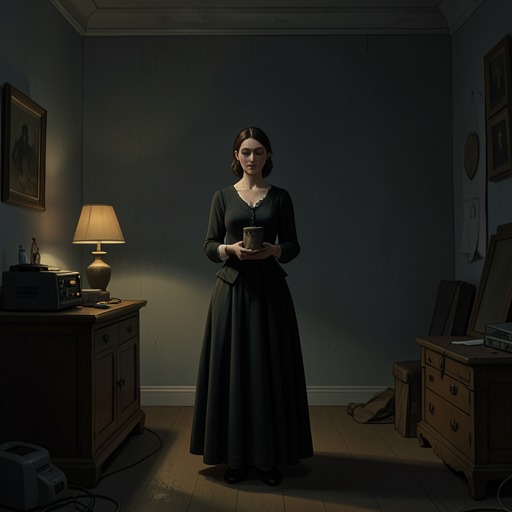
The LeopardPrincess Maria Stella of Salina, wife of Don Fabrizio Corbera, Prince of Salina, is presented chiefly within the private life of the Salina household. A mother of seven, she is restless and assertive, yet her efforts to secure loving influence over her husband meet with little success. Her brief appearances expose the distance between her domestic authority and the Prince’s freedom to disregard her needs.
Identity and Domestic Position
During the family’s Rosary, Princess Maria Stella brusquely puts away her rosary and looks across the household at her children and husband. The scene characterizes her as forceful and accustomed to command, but also as someone who longs for affection and influence over Don Fabrizio. Her position is therefore double: she has a visible role in the family’s daily order, yet the intimacy she seeks from her husband remains elusive.
The Prince’s household is large, and the couple have seven children. The account of the children makes the family setting vivid, but Maria Stella’s own perspective is not developed through an equivalent interior account. Instead, her gestures and the Prince’s interpretation of them establish the terms of their relationship.
Marital Distance and the Palermo Departure
When Maria Stella strokes Don Fabrizio’s hand at the table, he takes the gesture as pity and reacts first with irritation. The moment does not bring the couple closer: it prompts thoughts of another woman, and he orders his carriage for Palermo after dinner. He also tells Father Pirrone to accompany him, though the priest understands the outing as an insultingly transparent pretext for a love adventure.
Don Fabrizio briefly regrets giving the order after seeing his wife’s reaction, but he does not withdraw it. As he reaches the carriage, Maria Stella cries out to him from an upper window and has a fit of hysteria. He nearly tells the coachman to turn back, then chooses to continue to Palermo. The sequence makes the imbalance in their marriage concrete: her distress affects him momentarily, but it does not alter the decision he has made.
Motherhood and the Prince’s Recollection
Later, Don Fabrizio sees Maria Stella asleep after the crisis and feels tenderness toward her. He reflects that she has given him seven children and that she has been exclusively his. The thought marks a shift from irritation to pity and attachment, but it remains his assessment of their marriage rather than an exchange between them. Her motherhood is acknowledged, while her own wishes and account of the relationship remain largely outside the narrative’s focus.
The scene also places tenderness beside the unresolved tensions of the evening. Don Fabrizio can feel moved by his wife and recognize the claims of their shared life, yet his earlier departure has already shown how readily he acts without meeting her appeal. The account neither presents their marriage as devoid of attachment nor suggests that affection gives Maria Stella equal power within it.
Narrative Role
Maria Stella’s appearances help define the private costs of the Prince’s authority. Her glance across the family, the touch that he misreads as pity, and her cry from the window are brief actions, but each meets a response shaped by his priorities. The narrative gives her little direct access to explanation; instead, her feelings are made visible through gesture and through Don Fabrizio’s changing reactions. That restricted presentation makes her both a participant in the household’s emotional life and a figure whose inner experience remains less fully represented than her husband’s.